Standard 7: Planning for Instruction
InTASC Standard 7 involves planning for instruction in a meaningful way. Teachers are responsible in creating engaging instruction plans using knowledge they have in order to meet the needs and goals of the students while also following state guidelines. I will discuss how I used Bloom’s taxonomy; backwards design; and multiple intelligences in my planning for instruction.
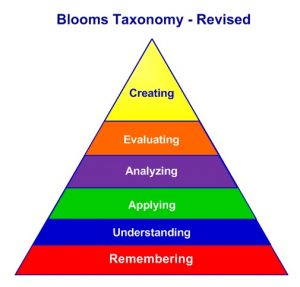
Using Bloom’s Taxonomy: Bloom’s taxonomy is a helpful tool in planning for instruction. As a teacher, we scaffold lessons and activities, so that students can reach the highest point of creation in Bloom’s taxonomy. The higher the hierarchy, the more likely students are experiencing meaningful learning in their fullest protentional. I used Bloom’s taxonomy when creating daily classroom objectives. This is significant as in the beginning of a unit, the lower levels of Bloom’s can be used to introduce and scaffold skills. When students are in the middle or near the end of a unit, the higher level of Bloom’s are essential and more relevant to students’ learning.
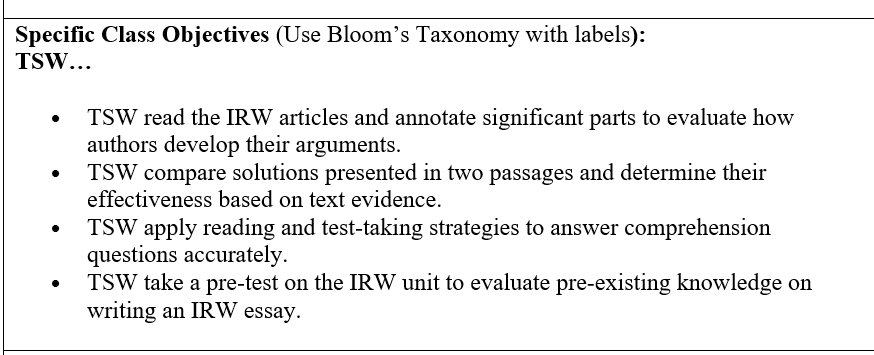
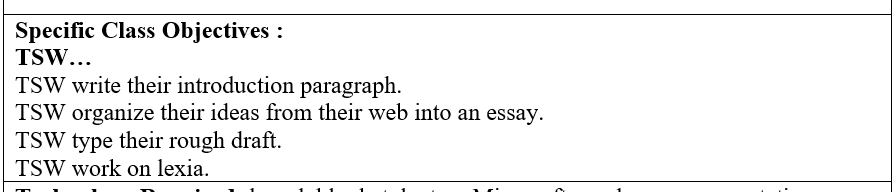
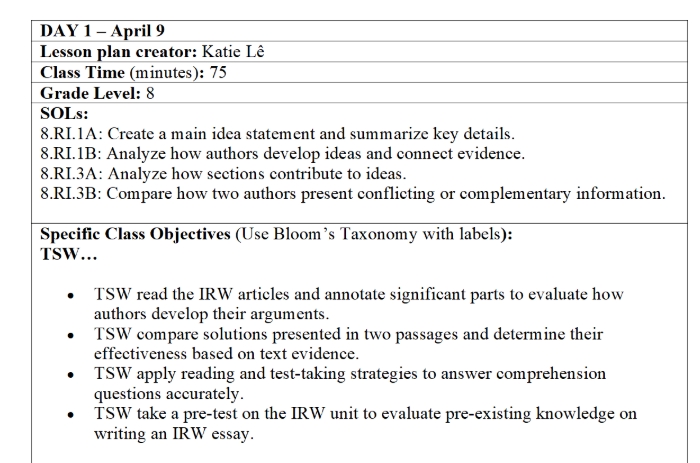
Backward Design: When planning for instruction, it is important to have a goal and objective in mind before planning for assessment and activities. In my student-teaching experiences, I used the Madeline Hunter Lesson Plan Template, which requires the planner to insert the Standards of Learning (SOL) and the objects before adding any instructional activities. Using the SOL as the overall goal for unit is how I used backward design to create and plan my two-week Intergrated Reading and Writing (IRW) unit. Attached are the lesson plans from the first three days of the IRW unit. le Unit 7 IRW april 9-11 day1-3
Incorporating Multiple Intelligences: Teachers need to create instruction that is meaningful for all students. As an enrichment activity for if students finish their final drafts of the integrated reading and writing (IRW) essay, students were instructed to create a graphic to go along with their microplastic pollution essay. This activity requires students to transform their written essay into something visual using Canva. Students work at different paces, so I planned for students to bring their work to the next level with a visual component. This activity allowed for varying types of intelligences to be used like spatial logical, intrapersonal. This enrichment activity widens the range of intelligences students had been using in their writing process as they had many been using linguistic and body-kinesthetic in their writing and typing.
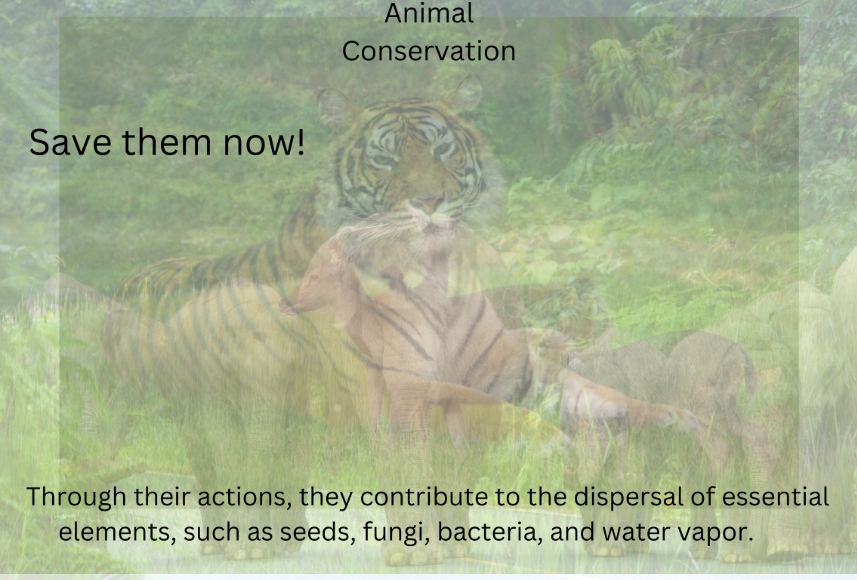
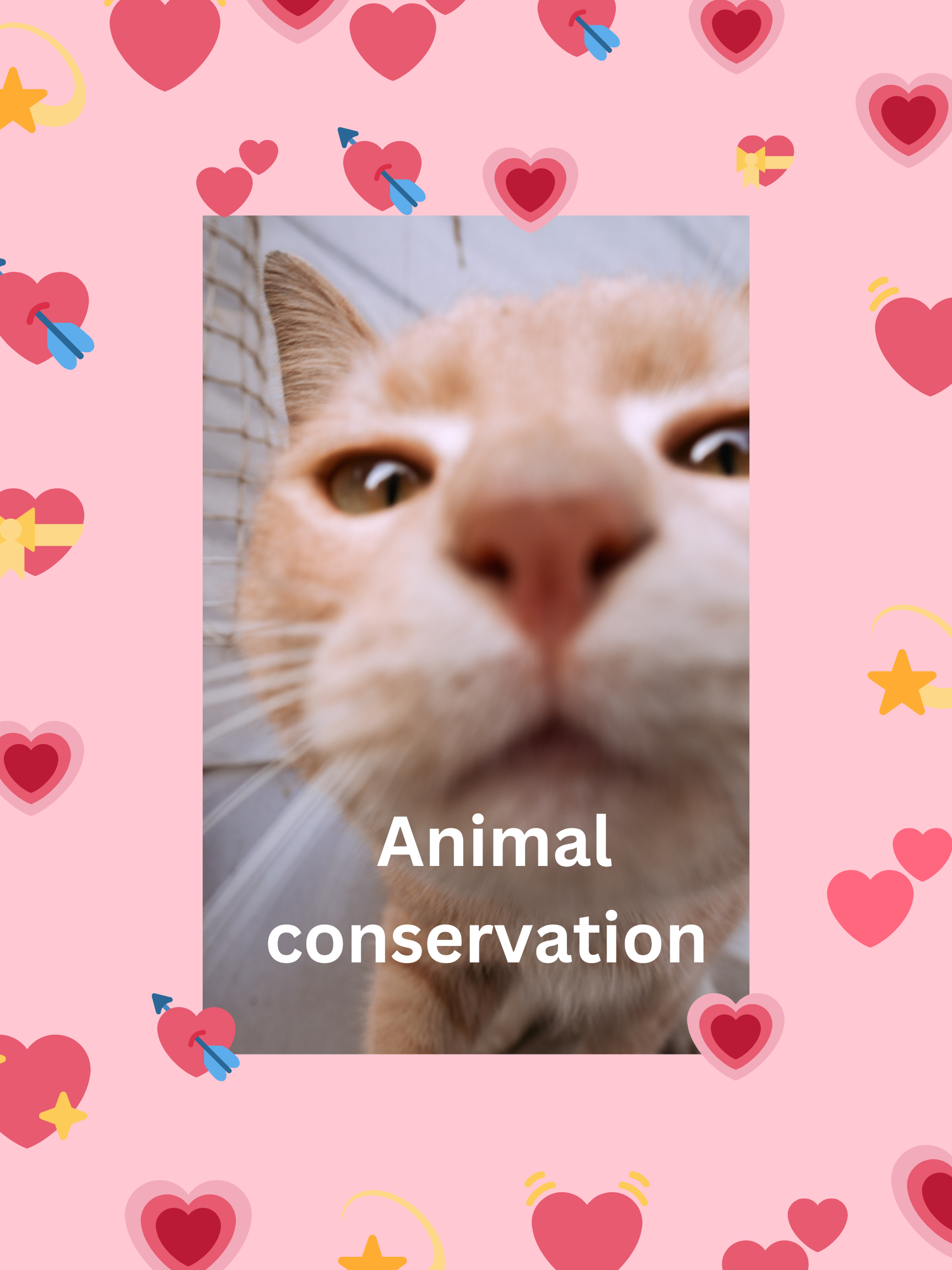
Attached is an example that EL students created. Their topic was on animal conservation.