Standard 6: Assessment
InTASC Standard 6 involves the use of assessment. Students need to be assessed in a variety of methods in order to properly measure growth and development. With these assessments, teachers can create lessons and adapt to where their students are. Teachers can use assessment results to develop instruction that can benefit students as a whole as well as individually. I will discuss how I used exit tickets, pre-assessment, and the Intergrated Reading and Writing (IRW) final paper to demonstrate standard six.
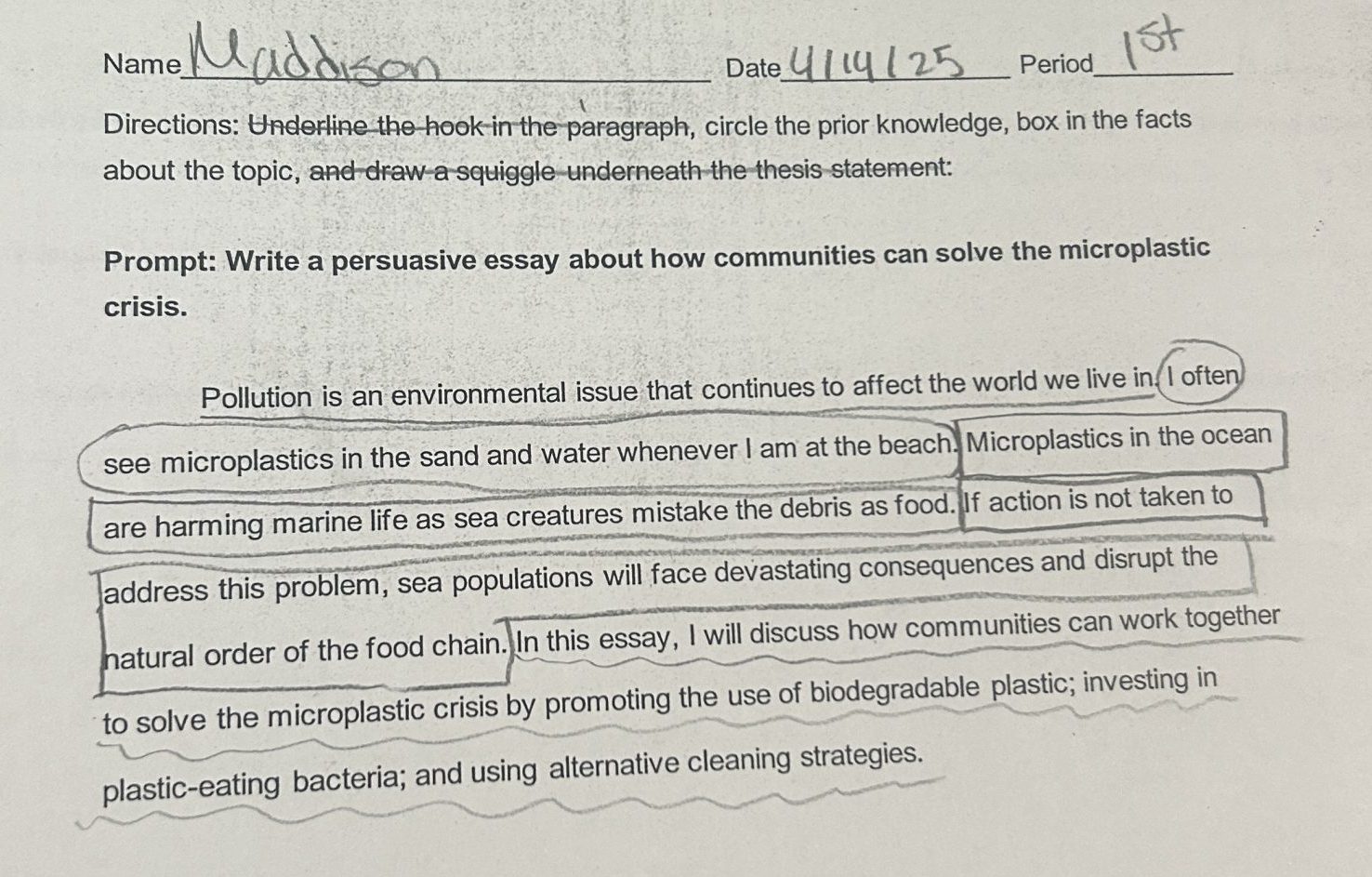
Exit Tickets: In my two-week unit, I used exit tickets as closures to measure student understanding from that day’s lesson. These exit tickets allowed students to apply and practice the skills like identifying parts of an introduction paragraph. With this data, I can plan on who needs more support or practice in that specific skill. This demonstrates the InTASC standard of assessments as it is a formative way for me to evaluate student progress on the desired skill. When reviewing the answers students raised their hands to come up to the Smartboard and mark their answers.
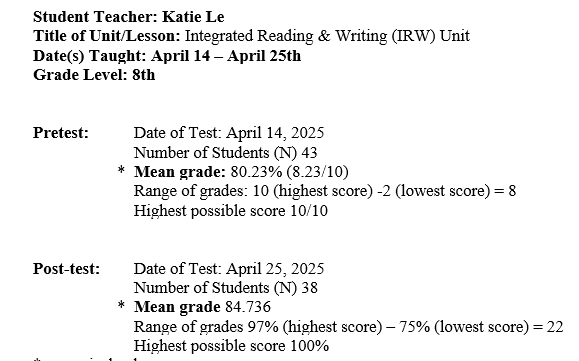
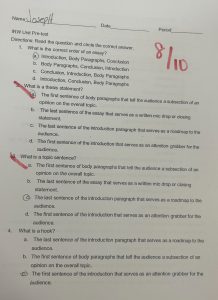
Pre-Assessment: Before teaching my two-week unit, I gave students a ten question, multiple choice pre-test on topics and skills that the IRW unit would touch on like parts of an introduction paragraph, thesis statements, and author’s purpose. This pre-test allowed me to measure what students already knew becoming starting this unit. This demonstrates the intasc standard of assessment as I used the pre-test to adapt my lessons to where students were and decide what skills they needed more or less support on.
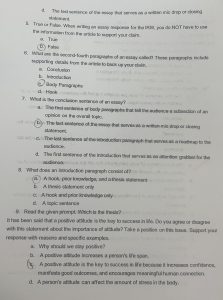
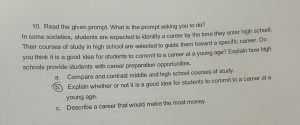
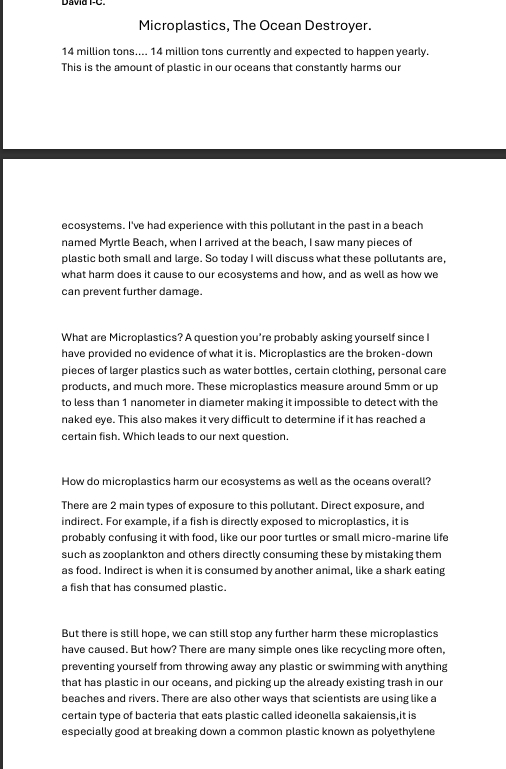
Final IRW Paper: As a post-assessment, students wrote their final integrated reading and writing (IRW) paper about microplastic pollution on Microsoft Word. With this final paper, students applied their skills on writing, drafting, editing, and citing. By using this summative assessment, students were able to showcase their skills and knowledge by creating a final paper. With the final paper, a more comprehensive assessment was able to be done in comparison to another standardized ten-question test. When comparing to the pre-test, students grew in knowledge as the lowest score was a 75% in contrast to the lowest of the pre-test being 20%. The average score increased as well in comparison to the pre-test. This demonstrates standard six of assessment as this final paper allowed students to showcase their skills that we had been scaffolding over the span of three weeks.